Search my reviews and thoughts

Wednesday, February 10, 2010

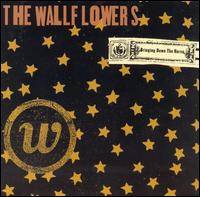
Dust It Off pick: Bringing Down the Horse


This is a new feature for Critical Condition. I often listen to an album or watch a movie that I haven’t listened to or watched in a while and will be reminded just how good it is. As I receive those reminders, I will document them on “Dust It Off” to urge the lovely people of the world to take it off the shelf and dust it off as well.

My first entry is for the 1996 Wallflower’s album Bringing Down the Horse, the most memorable album of an unfortunately forgotten band. The fact that the Wallflowers have gone relatively unnoticed while continuing to make good music since the release of Bringing Down the Horse is not one that I will explore… today.

What I will discuss is how downright majestic Bringing Down the Horse is. It also brings down the “sophomore slump" notion. The album starts off with a bang – the band’s signature song “One Headlight” - and keeps the momentum going. “6th Avenue Heartache” and “Three Marlenas” bring down the tempo, but keep you just as mesmerized. The tempo picks up again on “The Difference,” the most upbeat song on the record, just before taking a huge breath with the precious “Invisible City.” The rest of the album continues to alternate upbeat and laid back tracks, but never ceases to enchant. Bringing Down the Horse is also a great soundtrack for driving at night (FYI).

Tuesday, February 9, 2010

Super Star


For me, the most memorable Super Bowl moment was not Tracy Porter’s interception of Peyton Manning, any of the million dollar commercials, The Who’s halftime performance, or Drew Brees cradling the Lombardi trophy in his arms. The most memorable moment of Super Bowl XLIV came on Matt Stover’s missed field goal in the fourth quarter. The forty two year-old kicker missed a 51-yard kick with the Colts up 17-16. The Saints took over and scored two more touchdowns to win the game.

Some consider the missed FG to be the turning point of the game. It’s possible. Though that is not what makes it memorable. After the miss, with Peyton Manning obviously frustrated on the sidelines and all the Colts fans very disappointed, Stover lifted his head to the sky and pointed to the heavens.

When I saw that replay I thought “they must be showing his reaction to the field goal that he made in the first quarter,” but the announcers assured me that it was not. “Stover, a very spiritual man, points to the sky after every kick. Make or miss.”

It took a while for that to sink in. I had never seen that before, but it had such power. Stover, though he won a Super Bowl with the Baltimore Ravens, was not a member of the 2007 champion Colts team. He must have wanted to prove himself to the rest of the team, but he realized there was something more important. He acknowledged that there is something bigger than that kick, bigger than the game (even the biggest of all games). Stover acknowledged that, win or lose, God still reigns. It’s great that players are so passionate about what they do and work so hard to foster their gifts, but at the end of the day there are bigger things in this world. To see that on display, on the biggest of stages, was the brightest spectacle of the night.

Wednesday, February 3, 2010

The Simpsons Address Sexism


An episode of The Simpsons titled “Duffless” features a hilarious ad for Duff beer. The commercial opens with a group of women picketing outside of the McMahon and Tate Advertising building chanting “down with sexism.” Two young male onlookers lean against a Duff truck. One of them scoffs “Look at all those feminists." The other responds by asking “Are you thinking what I’m thinking?” The two males each grab a bottle of Duff, shake it up, and spray it on the protesters. The women are then transformed to dancing women in bikinis and their signs now read “Party Down,” “Get Me Drunk,” and “I’m Easy.”

The ad is a highly funny exaggeration of the sexism that exists in American culture, especially beer advertisements. A few moments after watching the ad, I began to feel guilty for laughing at it. Since the ad does reflect the unfortunate reality of the world, is it appropriate to laugh at? Do the writers consider sexism and the objectifying of women laughing matters? Surely not, The Simpsons can do no wrong! Right?

While no television show is morally infallible, I believe that this particular ad serves as appropriate social commentary as well as satire. The ad begins with the frame on the sign of the building “McMahon and Tate Advertising.” You may recognize the name as the agency that Darrin worked at in the 1960’s television show “Bewitched”. The allusion to classic television gives the building significance – old-school beliefs. Because of progress we’ve made such as women’s suffrage and Title IX it is not hard to consider sexism a thing of the past. The women are protesting those “notions of the past,” but after being sprayed down with some beer they become objects themselves. The ad is a reminder of how little progress has been made in valuing women, especially in the media.

Tuesday, February 2, 2010

Decade Playlist


It's about a month late and a pretty weak excuse for my first entry in two weeks, but here is my twenty-song playlist for the past decade. I'm not claiming that these are the 20 greatest songs, but simply twenty of my favorite songs in no particular order. I took into consideration some of my favorite songs at the beginning of the decade (when I was 11) though they had to have some staying power to make the list.

Highlighting the list is my pick for song of the decade: "Stacy's Mom." The song was unfortunately absent on so many "best of" lists. No other song this decade was so simultaneously fun and catchy. The chorus is killer, absolutely killer. It also embodies the milf/cougar element of the decade. People will listen to this song 30 years from now and feel the 2000's. It also took to the mainstream airwaves like no other power pop song. Everybody and their mother loved Stacy's Mom.

"Once Around the Block" Badly Drawn Boy
"Stacy’s Mom" Fountains of Wayne
"This Modern Love" Bloc Party
"War All The Time" Thursday
"Do You Realize??" The Flaming Lips
"My Number" Tegan and Sara
"Smokers Outside the Hospital Doors" Editors
"I Wish" R. Kelly
"Let Me Love You" Mario
"I Get Wet" Andrew W. K.
"Only For the Weak" In Flames
"Feel Good Inc." Gorillaz
"Only Time" Enya
"American English" Idlewild
"Emily Kane" Art Brut
"You Are Loved (Don't Give Up)" Josh Groban
"Recovery Room" The Jealous Sound
"Teen Angst" M83
"Dry Your Eyes" The Streets
"Alive" P.O.D.

Monday, January 18, 2010

Corey Monteith: Glee's hotti- er- lukewarmie


The television show Glee is about resurrection of a struggling high school Glee Club. Mr. Schuester, a Spanish teacher, was a member of Glee in its heyday as a high school student. After the former leader was fired, Mr. Scheuster volunteers for the position, hoping to return the club to glory. In a search to find more male voices, Mr. Scheuster discovers Finn – football team quarterback and secretly great singer. Mr. Scheuster convinces Finn to join Glee, making Finn the savior for two reasons. One, his joining opened the floodgates and led to more students joining. And two, he has a good enough voice to complement Rachel Barry, the star of the club with a powerhouse voice. The problem is that Corey Monteith, the actor who plays Finn, does not have that voice.

As far as the actors go, Monteith, may have the worst voice in the club. What makes matters worse is that Finn is often told how incredible he is. Mr. Scheuster tells him that “it’s not easy being special,” but Finn doesn’t seem special at all. Monteith, fits the “gentle jock” bill well enough, but is not a great singer and does make a very intriguing character. It appears he was cast more for jock-believability than ability. Ryan Gosling doesn’t look like a football player, but I bought it in Remember the Titans. So many characters in the show fawn over Finn. Rachel and Kurt are both in love with him and I just can’t figure out why. Finn is not supposed to be a very bright character, but I wouldn’t expect him to be so dull either. So much of the show’s drama revolves around Finn, but the characters who obsess over and admire him are far more dynamic themselves.

Now I should concede that I’ve fallen slightly in love with Rachel Barry- yes, the character- and am a bit jealous of Finn because she likes him – yes the fictional character. But juxtapose Finn with Troy Bolton. Hate on HSM all you want, but Zac Efron is a charming performer, more than adequate singer, and believable enough athletic star. Finding another Efron is easier said than done, but Monteith doesn’t even have prior singing experience (and it shows). I have a hard time believing that of the thousands upon thousands of actors struggling to make it, not one of them would make a more exciting Finn.

Sunday, January 17, 2010

Glee's Love Isn't Fair


The television show Glee deals with high school students on the margins of popularity. The show seeks to shine the spotlight on this group of students (which is diverse in race, gender, physical ability, and sexuality) in a way that is quite admirable, but still falls short. Glee’s handling of Kurt, a homosexual character, is a bit insensitive.

The struggling Glee Club receives its savior in Finn, the football team’s quarterback with a heart bigger than his brain and a wealth of untapped vocal potential. Finn is dating Quinn, a cheerleader and eventual Glee Club member herself, but other members of the Glee Club develop feelings for him. One, Rachel Berry, is the abrasive-yet-actually-pretty-hot starlet of Glee Club and the other is Kurt.

Early in the season, it becomes clear that Rachel’s feelings for Finn are at least a little mutual, but Finn’s relationship with Quinn complicates the ensuing love triangle. Rachel and Finn’s relationship is portrayed as one that should be rooted for, a forbidden love in the vein of Jim and Pam from The Office. They seem to be at their best when they are with one another and their intimate moments come complete with delicate background music.

Whenever Kurt and Finn interact, the portrayal is quite different. Finn does not display any tendencies other than heterosexual and does not foster any romantic feelings for Kurt. Scenes containing Kurt and Finn often focus on Finn’s discomfort around Kurt for comic effect. I take no issue with Finn’s discomfort because it simply reflects the reality that many in this world are not comfortable with homosexuality, but the humor in their interactions is very unsettling.

Kurt’s feelings are not taken seriously until a brief confrontation with Rachel late in the season. Hopefully later seasons will give some humanity to Kurt and his feelings because the first season treated them as little more than a running gag. Glee spends so much time developing the Rachel-Finn relationship that Kurt seems insignificant. I understand that Rachel and Finn are main characters and there is more to develop in a relationship in which feelings are mutual, but we push for Rachel so much that we forget her success with Finn would also cause heartbreak for Kurt. Even if they are not central to the story, Kurt’s feelings are just as real as Rachel’s and should be treated as such.

Friday, January 15, 2010

Glee Spins its "Wheels"


One episode of the television show Glee entitled “Wheels” has been widely hailed for its ethics, but critics should not be so generous with their praise. In the episode, all of the members of the Glee Club are required to spend time each day in a wheel chair to better understand how Artie, the paraplegic member of the Club, struggles with high school life.

The premise is admirable and the show very sensitively portrays a handicapped character. Physical handicap is one very underrepresented demographic in film and television so I am glad to see such a character even included in such a popular show.

The thing that bothers me most about Artie is his casting. Kevin McHale, the actor who plays Artie, is not handicapped. He is a fine actor and does very well in the wheelchair, but a handicapped actor should have been given the opportunity to represent the physically handicapped on national television.

I have never been involved in television or film casting before, but I’m guessing that handicapped people aren’t cast for roles unless being handicapped is written into that role. A producer might cast an actor with glasses even if he didn't envision glasses for a character. But if a role calls for a tall, dark, and handsome man and the tallest, darkest, and handsomest man turns out to also be in a wheelchair, I would wager that he does not get the role. The producers might think something along the lines of “Well he may be the best, but I didn’t plan on my character being in a wheelchair. That guy was almost as good and he can walk, let’s give him the role.”

So if the only role that a handicapped actor has a legitimate shot at is a handicapped character, why take that role away from him or her? Glee’s treatment of Artie is a great step forward for television (especially for a show that involves dancing and performing) and I am very happy that the show has become so successful. I just think that the show should give a handicapped performer the chance to shine, just like the fictional Artie receives his chance. Glee had the chance to take a step for handicapped performances, but didn't take it.