Search my reviews and thoughts

Friday, May 25, 2012

Spend a Life


I’ve recently been contemplating the human ability to connect with one another and the tremendous potential for harm and good that lies within it (which is brilliantly explored in the film The Descendants). I’ve come to the conclusion that the power to connect is greatly under-valued.

We are taught to stand out. From a young age, we are encouraged to pursue our gifts and we receive compliments when we do them well. The prevailing “good” message seems to be to hone our gifts despite what cultural authorities say. Stories of young people defying their parents’ wishes of having a good career to follow their own artist paths are extremely romanticized. I think that this message may also lead us astray.

I think that instead of pursuing what makes us special, we should pursue what makes us powerful. And I think that what makes us powerful is the most common ability that a person receives: the ability to love.

We are at our most capable, our most world-changing, and our most unstoppable when we love. When we forgive others we tap into a beauty that transcends our own abilities and when we care for others we offer a healing force that is stronger than medicine or art.

I don’t think it’s wrong to pursue your passions. If you love to sing, play, write or whatever, do it. Do it well, but don’t let it get in the way of your love. Don’t neglect human relationships so that you can spend time building up your own kingdom. Make your life’s work about the building of OUR Kingdom.

That’s what I think right now.

Saturday, January 28, 2012

The Good Fight


For a time I had decided to boycott violent films. My media studies, observations of children (especially boys) fantasizing about violence, and the presence of violence in the world led me to categorize violent entertainment as inappropriate content. No exceptions. For a while, that boycott kept me from watching my beloved X-Men in their new film, X-Men: First Class, but I recently gave in, watched the film, and was thoroughly enchanted.

I credit the film’s success to its focus on Charles Xavier. What fascinates me about Xavier is his commitment to peace and that he risks his own life to defend those who hate him. His virtue is almost Christ-like and his reluctance to fight is heavily rooted in Just War Theory: a theory that is at the core of my personal view of violence in the world and media. Xavier’s pacifistic philosophy was enough to redeem the X-Men in my eyes, but I still find flaws in the X-Men’s distribution.

Not all of the X-Men share Xavier’s nonviolent philosophy and that is the primary conflict of the series. The battle of wills in X-Men is complex and requires a mature, contemplative audience. However, the X-Men and other superheroes are often marketed to children in the forms of cartoons and action figures. Children will catch the explosions and the punches, but miss the debate on violence’s merit. We need to take a step back and consider the risk we are taking by packaging such mature content for immature minds.

Friday, January 13, 2012

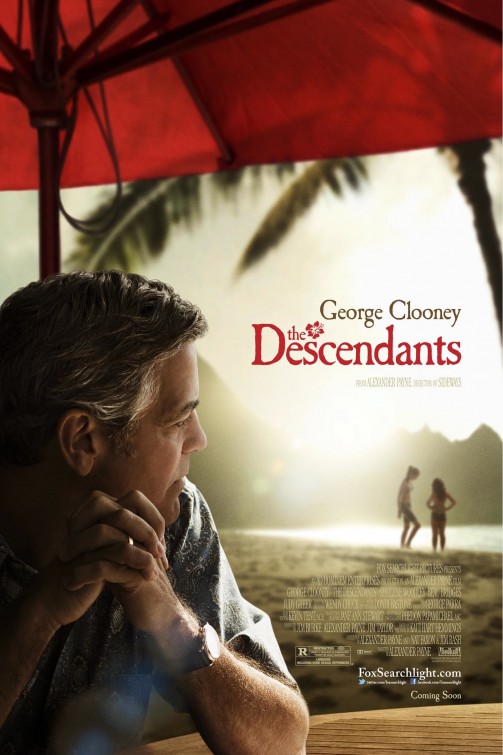
The Descendants


If a picture is worth a thousand words, how many is a motion picture worth (I can’t be the first person to ask that, can I?)? When it comes to Alexander Payne’s The Descendants, the answer is quite a few. And if I tried to put the film’s rich message on the nature of human connection into words, so much would be lost in translation (which is funny because it’s based on a novel). I don’t know how much of the insight is from the novel (I’ve never read it) and how much is originally Payne’s, but insights do abound.

Films that prompt so much thought and conversation are very rare, and are to be cherished. None of the performances, dialogue or production stand out because they all work together to support the story and its message, just as the elements of a great classic film should. And this is a great film. Each of its elements form a beautiful tapestry about human relationships. We are capable of doing tremendous harm and tremendous good to others, and The Descendants explores that with such grace.

Wednesday, January 11, 2012

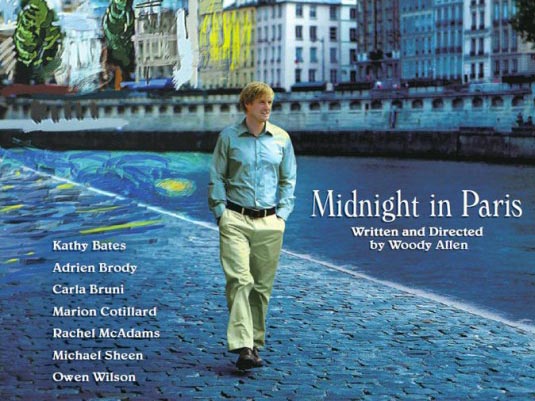
Midnight in Paris


Sometimes settling for something simple, instead of being extremely ambitious is an admirable thing. Such is the case with Woody Allen’s Midnight in Paris. It doesn’t aspire to be anything extravagant, just a clean, compact, well-acted, cleverly-written pleasant film. Its message about dealing with feelings of discontent is similarly not groundbreaking, but extremely welcome. It’s sheer brilliant escapist fun. This refreshing, fun piece of art seems so easy, but I think Allen just has a lot of practice.

Monday, January 9, 2012

Jesus in the Top 40


“Jesus Walks” by Kanye West and “Coming Home” by Diddy Dirty Money are two of the most Christian hip hop songs to infiltrate this millennium’s Top 40. I have found the songs to be both beautifully confident Christian messages and troubling artistic expressions.

One reason for my troubles is the coarse lyrics: each song contains the word “shit.” I don’t believe that Christians are obligated to remove all expletives from their vocabularies—I believe that there are much bigger fish to fry, AND I believe that there are times and places for profanity—I’m just slightly puzzled by the inclusion of profane language in public messages (pop songs) with such clear associations with to the Christian faith.

Another reason for my troubles is that the very same albums on which Kanye and Diddy make such powerful Christian claims, feature some morally questionable songs. Kanye’s “The New Work Out Plan” is a celebration of sexual promiscuity featuring lyrics like “Tell me who’s invited // you, your friends and my dick.” Diddy Dirty Money’s “Ass On The Floor” repeatedly instructs its audience to (take a guess) “get your ass on the floor.”

I have often felt slightly disappointed listening to “Jesus Walks” and “Coming Home”. I felt as though the artists botched opportunities to make great art honoring our Lord. I felt as though the artists should have taken a little more responsibility when associating with a humble, Holy Savior.

Then the grace of God softened my heart.

The message of Jesus is one of grace. The Christian victory does not lie in the work of Christians, but the forgiving work of Christ. We are not instructed to fix ourselves. We are called to come to Christ as we are, broken and flawed. The songs “Jesus Walks” and “Coming Home” are two of the best examples I’ve witnessed of that behavior. I don’t think the songs validate the messages of the entire Kanye and Diddy canons, but I do think that the complete and utter submission on these two songs is something to be celebrated.

And it’s nice to be able to consider these songs worship because they are SO much better than most other “Christian” music.

Saturday, May 21, 2011

Miss May


May traditionally marks the beginning of the summer movie season and each of the last two years, my May movie darling has been a Kristen Wiig film.

Last year, MacGruber, which had Wiig in a supporting role, exploded onto the screen in a burst of high-octane silliness. This year, Bridesmaids (which Wiig starred in and co-wrote) stole my heart and somehow surpassed the comic potential that Wiig has been showing for years.

Bridesmaids is the funniest movie I have seen in a long time. Many of my favorites (Napoleon Dynamite, Borat, Team America) have trouble sustaining their comedy the entire film. At a bold 120 minutes, Bridesmaids is almost always funny. And when it's not funny, it's because it's not supposed to be (but it's still interesting). Bridesmaids boasts terrificly written and brilliantly performed characters that one can't help but fall for.

I think Wiig should have to pay Tina Fey royalties, though. See similarities:
1) Both got their breaks on Saturday Night Live
2) Each enjoy roles as writer and lead actress (Wiig for Bridesmaids and Fey for 30 Rock)
3) Wiig's character, Annie, was written with a self-deprecation that screams Liz Lemon
4) One of Annie's few "romantic" relationships is with an ironically repellent Jon Hamm character (again, 30 Rock much?)

Friday, March 4, 2011

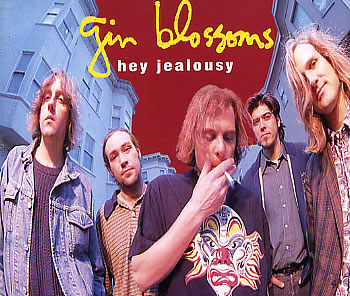
Considering Gin Blossoms, the album


Artists are often celebrated for making great albums. I for one am not a big fan of the album and I’m kind of happy to see it fade away in this mp3 age. I don’t know why an artist should be required to make all the music he or she writes mesh in a cohesive way in order to release it. Artists like Billy Corgan have expressed anti-album sentiments. I think a single song can stand alone as a complete work of art. If it fits with other stuff, great. If not, who cares? I much prefer a good mixtape to a good album (because albums are so difficult that even good ones aren’t that good).

I propose that people celebrate “singles artists” a bit more. I don’t mean that everyone has to appreciate Top 40 hits; I just think that artists who only produce a couple great songs should get more credit. Exhibit A: Gin Blossoms.

Guitarist Doug Hopkins only wrote five songs on Gin Blossoms’ first major label release, New Miserable Experience. Only two of the five songs, “Hey Jealousy” and “Found Out About You” were any good. But they were great. After the album was completed, the band kicked Hopkins out because of his drinking problem and got famous off his two masterpieces. He committed suicide later that year.

You listen to those songs and you can’t help but wonder, “What else did he have in him?” He could have written so many more great tunes. But he might not have. He may have been a two hit wonder. But that shouldn’t be frowned upon. He wrote two masterworks. So many “great” albums don’t have any songs nearly as good as those. So let’s celebrate the people who only have a couple great songs in them. It’s more than most of us.